 Jan 17,2026
Strella has been one option for teams looking to gather user feedback, but it is far from the only choice available.
The problem with traditional user research is predictable. You spend $35,000 and wait over a month for insights that may already be outdated by the time they reach your inbox. Product decisions pile up. Competitors move faster. Your team makes guesses instead of informed choices because the data arrives too late to matter.
This article covers 8 alternatives to help you gather user insights without the usual delays or budget constraints. Each platform takes a different approach to solving the same problem, which is getting reliable feedback from the right audience at a reasonable cost.
| Platform | Key Strength | Participant Access | Starting Price | Speed |
| Evelance | Predictive AI research | 2M+ predictive models | $399 | Minutes |
| Maze | All-in-one testing | 6M+ participants | $99/month | Days |
| Lyssna | Targeted recruitment | 690,000+ vetted users | Freemium available | Days |
| UXtweak | Global reach | 130+ countries | Freemium available | Days |
| Dscout | Video-based research | 3M+ partner panels | Contact for pricing | Days to weeks |
| User Interviews | Professional recruitment | 6M vetted users | Pay per participant | Days |
| Lookback | Live user sessions | Bring your own users | Subscription-based | Days |
| Optimal Workshop | Information architecture | Panel access available | Tiered pricing | Days |
1. Evelance
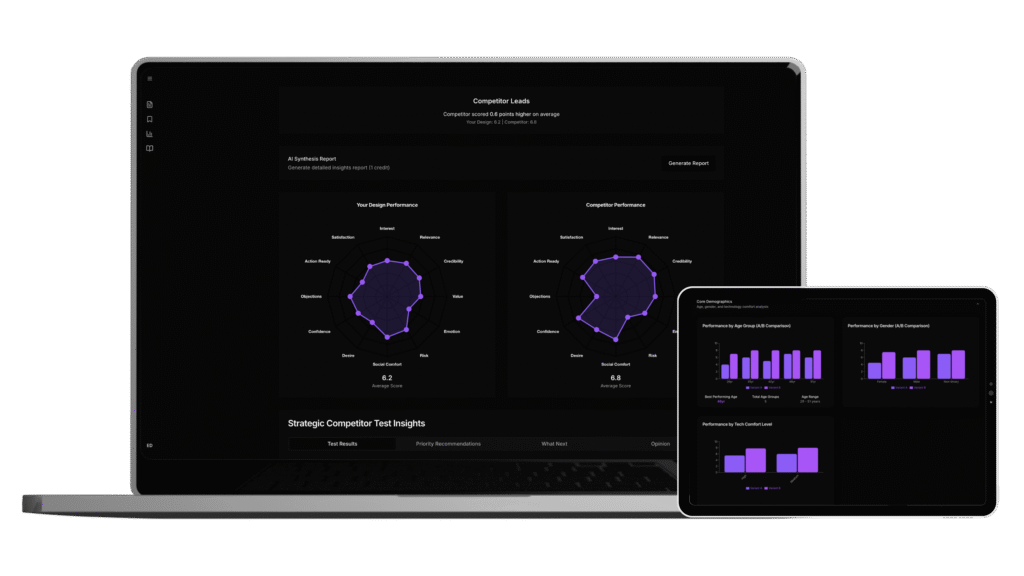
When your validation timeline is measured in hours instead of weeks, Evelance becomes the obvious choice. We built Evelance to solve the problem that product teams need reliable user insights but cannot afford the time or budget that traditional research demands.
Evelance is a predictive user research platform. Instead of recruiting real participants for every test, you run concepts through personas that simulate how specific user segments will react. The results come back in under an hour, and they match real human responses with 89.78% accuracy.
Here is what that looks like in practice.
- A recent validation study compared 7 Evelance personas against 23 real people reviewing the same product concept.
- The personas flagged identical concerns, valued the same features, and expressed the same hesitations as the actual users.
- All of this happened in under 10 minutes.
Why Teams Choose Evelance
The math is simple. Traditional research costs around $35,000 and takes 6 weeks. Evelance delivers comparable insights in under an hour. That preserved budget goes toward development instead of recruitment fees and incentive payments.
We maintain over 2 million personas covering both consumer and professional profiles. You can test with specific segments without scheduling calls, coordinating time zones, or waiting for availability.
While other teams debate assumptions internally or wait on research timelines, you iterate based on evidence. Speed becomes a competitive advantage when decisions come from data instead of committee consensus.
For teams that need to compress validation cycles from weeks into minutes, Evelance is designed for exactly that scenario. Run tests between investor meetings. Validate pivots overnight. Make evidence-based decisions fast enough to matter.
2. Maze
Maze brings recruiting, testing, and analysis together in a single platform. Over 60,000 product teams use Maze to run usability tests, prototype validations, and concept testing studies.
The platform provides access to a panel of over 6 million participants. If you prefer working with your own user base, Maze supports that as well. Pricing starts at $99 per month for the Starter Plan, which makes it accessible for smaller teams.
Best For
Maze works well for teams that want traditional usability testing with faster turnaround than custom recruitment. The learning curve is manageable, and the built-in analysis tools reduce time spent processing raw data.
The main limitation is timeline. You still need to wait for participant responses, which can take days depending on your study size and audience requirements.
3. Lyssna
Lyssna has built a reputation among product and marketing teams for targeted participant recruitment. Over 320,000 users trust the platform for their research needs.
The standout feature is audience targeting. Lyssna offers 395+ demographic and psychographic filters to help you find the right participants. Their panel includes 690,000+ vetted B2B and B2C users, so you can get specific about who reviews your concepts.
Best For
Teams that need precise audience matching will appreciate the filtering options. If your product serves a niche market, Lyssna’s targeting capabilities can help you avoid generic feedback from participants who do not represent your actual users.
The trade-off is cost. Highly targeted recruitment typically comes with higher per-participant fees.
4. UXtweak
UXtweak positions itself as an all-in-one research platform for recruitment, study management, analysis, and insight sharing. The platform has been used to craft over 570,000 questions and collect more than 1.8 million responses.
Global reach is a core strength. UXtweak offers access to participants from 130+ countries with 2,000+ targeting attributes. If your product serves international markets, this coverage becomes valuable for understanding regional differences in user expectations.
Best For
Teams building products for global audiences will find the international panel useful. The platform handles multiple research methods, which reduces the need to switch between tools for different study types.
The interface can feel overwhelming at first, so expect some onboarding time before your team runs studies efficiently.
5. Dscout
Dscout focuses on video-based research that captures user reactions in context. The platform is AI-powered and designed to deliver information quickly.
Participant sourcing is flexible. You can hand-pick users, auto-recruit from Dscout’s verified panel, access their 3 million+ partner panels, or bring your own participants. Headspace used Dscout to build their first customer-facing AI product through usability testing and naming tests.
Best For
When you need to see and hear user reactions, Dscout delivers rich qualitative data. Video responses capture nuance that survey responses miss.
The trade-off is analysis time. Video data takes longer to process than quantitative feedback, even with AI assistance.
6. User Interviews
User Interviews focuses on one thing: connecting research teams with the right participants. Their audience includes 6 million vetted consumers and professionals.
The platform is straightforward. You define your participant criteria, User Interviews handles recruitment, and you conduct your research using your preferred methods and tools. Concept testing has gained traction as a research method, up 6 percentage points year-over-year to 64% adoption according to their data.
Best For
Teams that already have research tools they prefer but struggle with recruitment will find User Interviews helpful. You pay per participant, which keeps costs predictable and scales with your actual research volume.
The limitation is that recruitment still takes time. Finding specialized participants can require days of waiting.
7. Lookback
Lookback specializes in live user sessions where you watch participants interact with your product in real time. The platform supports moderated and unmoderated studies, with features for taking notes, tagging moments, and sharing highlights with stakeholders.
The focus is on observation rather than panel access. Lookback expects you to bring your own participants or use another service for recruitment.
Best For
Teams that value live observation and real-time follow-up questions will appreciate Lookback’s session management features. The ability to probe deeper when something unexpected happens creates opportunities for richer insights.
You will need a separate solution for participant recruitment unless you are testing with existing users.
8. Optimal Workshop
Optimal Workshop focuses on information architecture research. The platform offers card sorting, tree testing, first-click testing, and surveys.
If you are designing navigation systems, content organization, or menu structures, these specialized tools address problems that general research platforms handle less effectively.
Best For
UX teams working on site architecture and navigation will find the specialized testing methods useful. The platform produces actionable data about how users expect information to be organized.
The scope is narrower than other platforms on this list. You will likely need additional tools for usability testing and concept validation.
Making the Right Choice for Your Team
Each platform on this list solves user research problems differently. Some offer speed. Others provide depth. A few focus on specific research methods.
The deciding factor usually comes down to your constraints. How much time do you have? What budget can you allocate? How specific are your audience requirements?
For teams where speed and cost matter most, Evelance offers something the others cannot: validated insights in under an hour instead of weeks. The 89.78% accuracy rate means you can trust the predictions enough to make real product decisions.
Traditional research still has a place when you need live conversation or video observation. But for concept validation, feature prioritization, and rapid testing cycles, predictive research removes the delays that slow down product development.
The best research platform is the one that gives you reliable insights before your window of opportunity closes. If you are tired of waiting weeks for feedback that should take hours, Evelance was built for exactly that problem.