

 Oct 19,2025
Duolingo dominates language learning with 116 million monthly users. Babbel has 16 million lifetime subscriptions. One is free and internet famous. The other charges $17.95 monthly and most people haven’t heard of it.
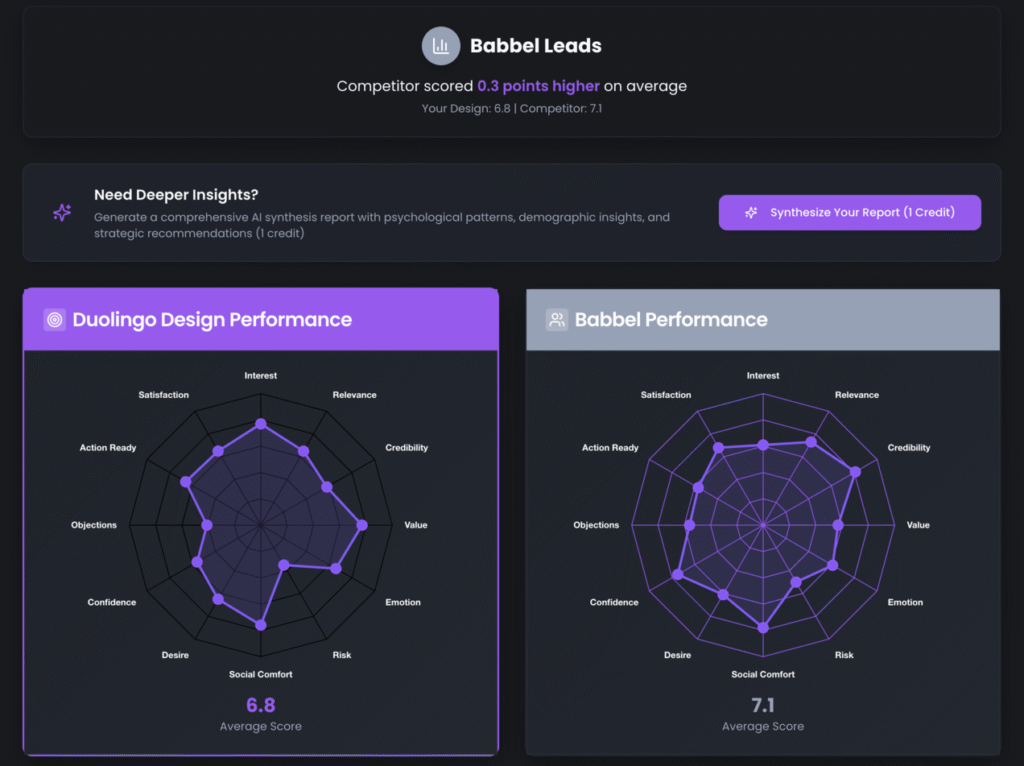
We tested their homepages against 10 adults curious about learning a language. Babbel won. 7.1 out of 10 versus Duolingo’s 6.8.
The result reveals something surprising about what makes people actually start learning.
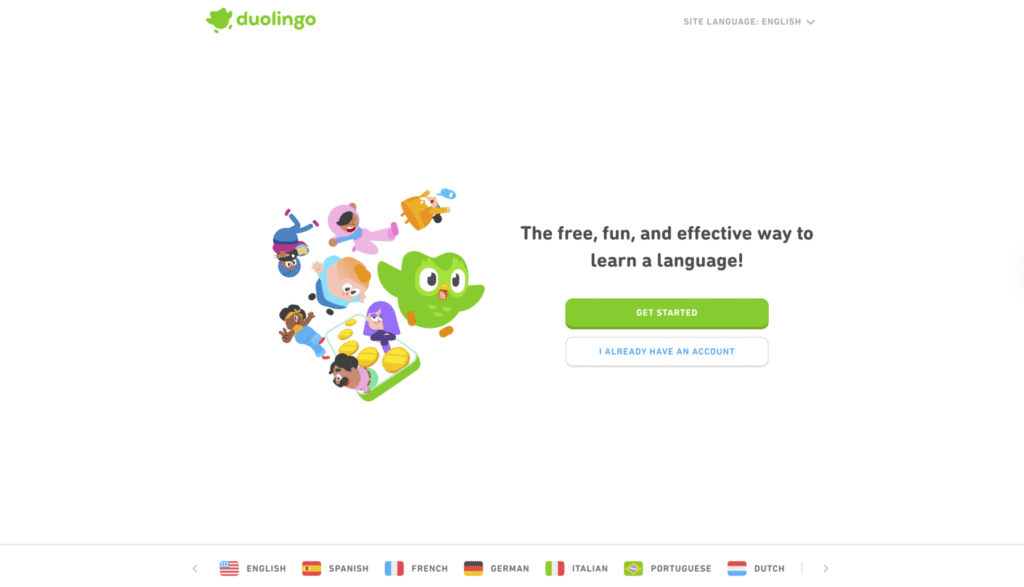
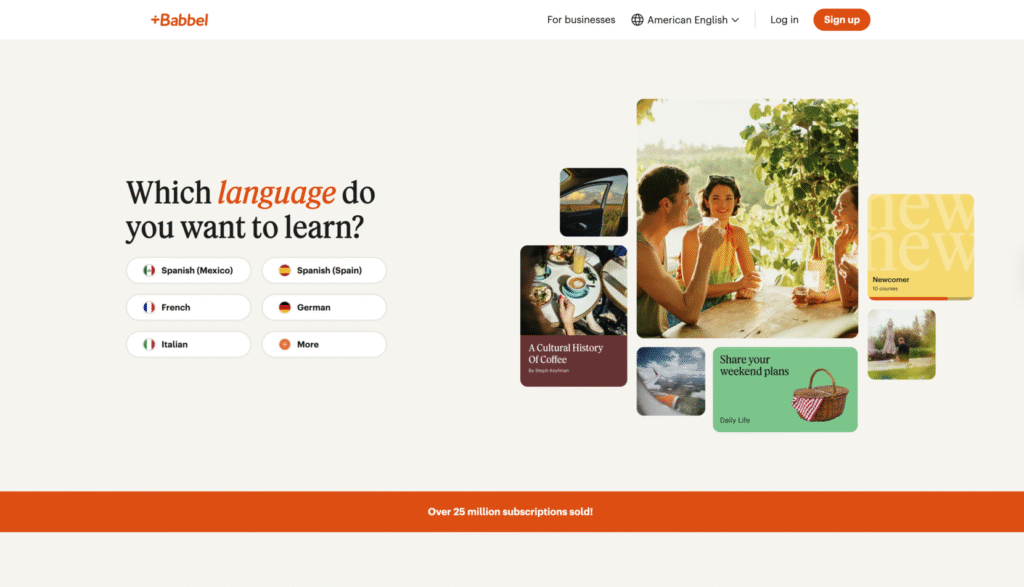
Below is a sample of both Duolingo and Babbel’s homepage, which were used to run a predictive user research test with Evelance. For the test, Evelance’s URL input captured the entire page for our personas to evaluate.
Building The Test Audience
We used Evelance’s custom audience builder and described our target in plain English: “Adults aged 25-40 who want to learn a new language for career advancement, travel, or personal growth. They include working professionals looking to add skills to their resume, frequent travelers wanting to communicate abroad, and lifelong learners pursuing personal development.”
Evelance generated 10 predictive audience models in seconds. Each persona carried real context:
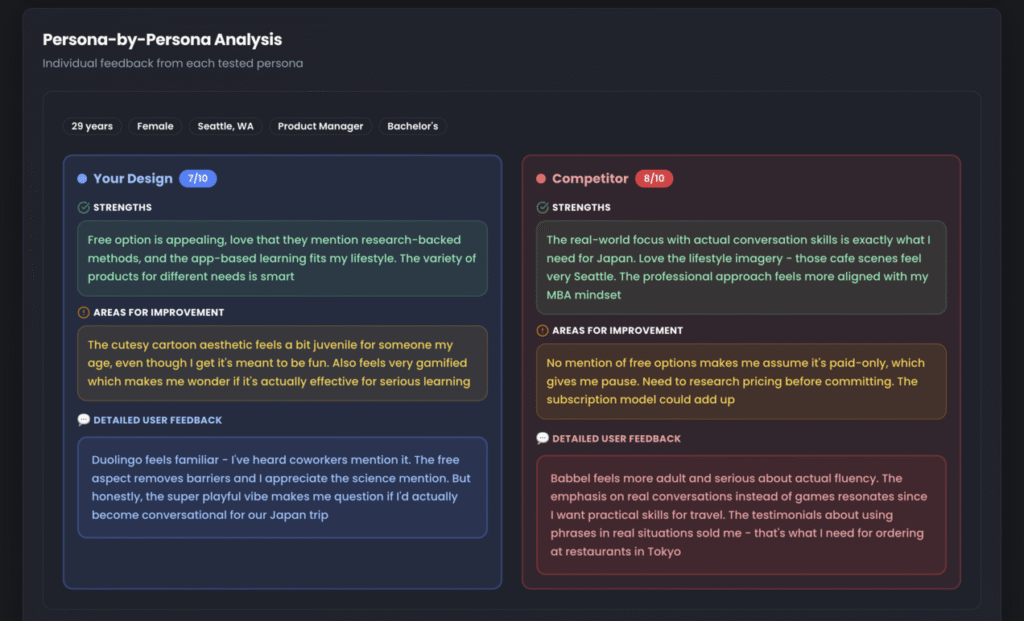
- The 29-year-old Seattle product manager planning a Japan trip
- The 38-year-old Chicago marketing director juggling parenting exhaustion
- The 32-year-old Austin software engineer climbing at the gym and stressed about student loans
Each persona evaluated both homepages and rated them independently.
Download Evelance AI’s Synthesized Report
Setting The Journey Stage
These personas were curious. Not committed to learning yet. Just exploring whether language learning might fit their lives. The conversion goal was signing up for a free trial or starting the first lesson.
How The Measurement Worked
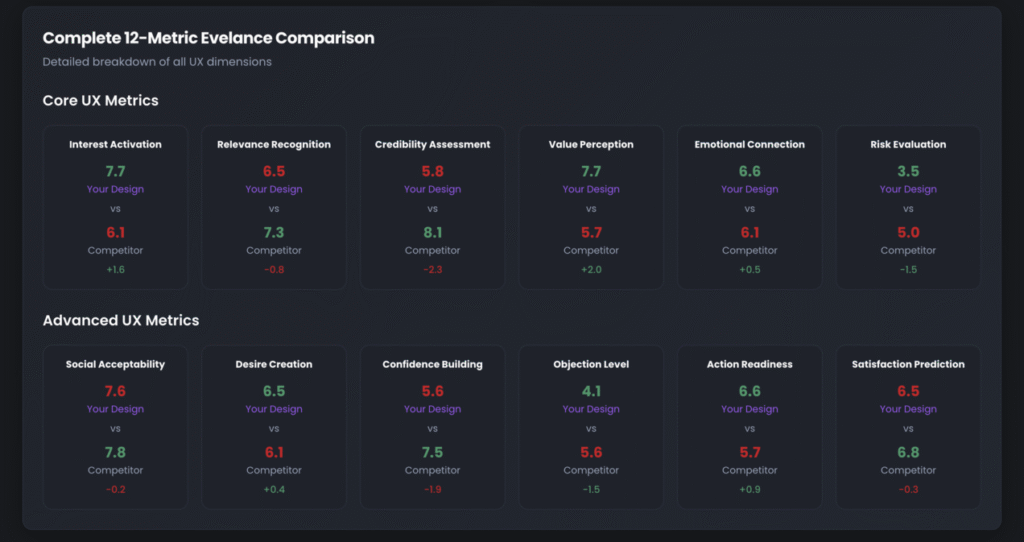
Evelance measured 12 psychological dimensions for each persona viewing each homepage:
- Interest Activation tracked whether the design grabbed attention
- Credibility Assessment measured trust
- Value Perception captured how users evaluated worth
- Action Readiness predicted likelihood to start learning
The platform’s Deep Behavioral Attribution explained why each response happened. The 40-year-old Boston financial analyst didn’t reject Duolingo randomly. He felt embarrassed telling his golf buddies about using a cartoon app for his Tuscany trip.
Preview of Evelance’s Dashboard
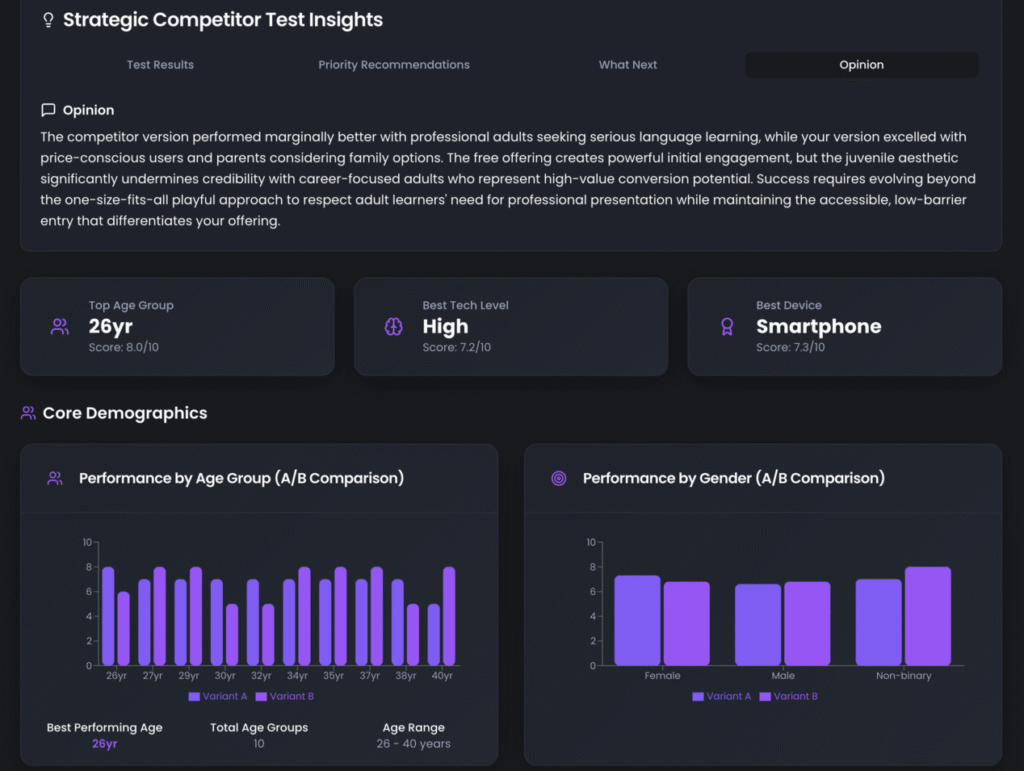
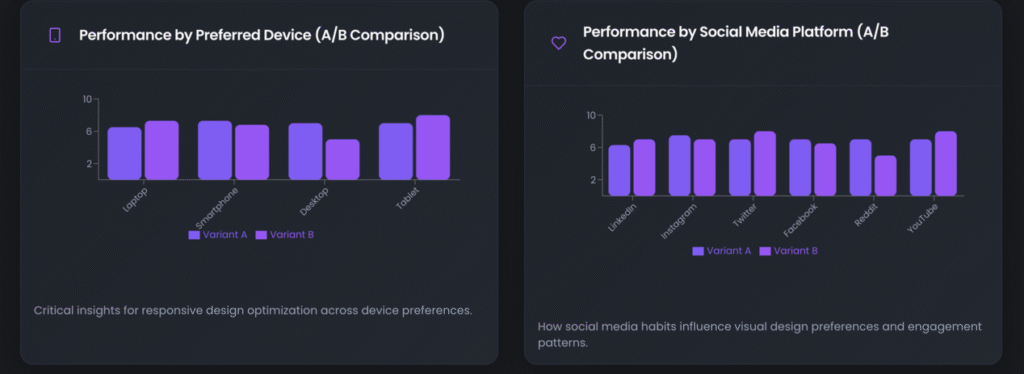
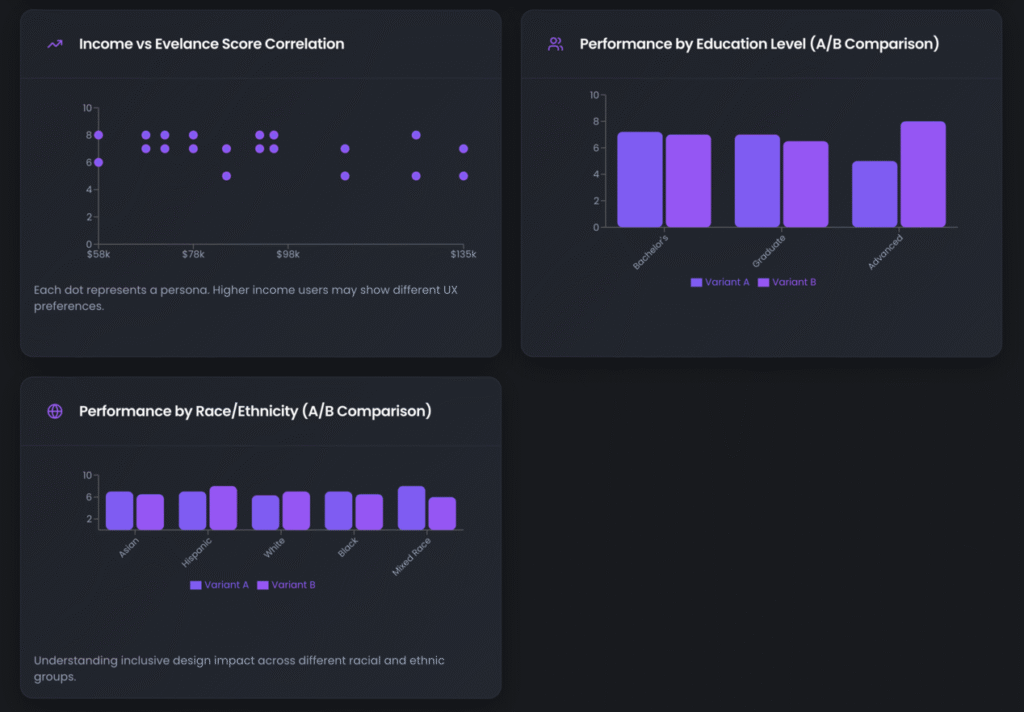
Free Won Value But Lost Trust
Duolingo crushed Babbel on Value Perception. 7.7 out of 10 versus Babbel’s 5.7. That’s a 2-point gap.
Free access removes decision friction completely. No calculating whether it’s worth the money. No wondering about subscription costs. Just start.
The 26-year-old Denver content creator gave Duolingo 8/10: “Love how approachable it feels! The ‘free, fun, effective’ message hits home since my income fluctuates.”
Duolingo also dominated Risk Evaluation with 3.5 versus Babbel’s 5.0. Lower numbers mean less perceived risk. Users could try without commitment anxiety.
Then Free Triggered The Quality Question
The 37-year-old Phoenix operations manager gave Duolingo 7/10 but questioned it: “Free usually means you get what you pay for.”
Credibility Assessment scores reflected this tension:
- Babbel: 8.1/10
- Duolingo: 5.8/10
That 2.3-point gap represents massive trust deficit.
The Cartoon Problem Cost Conversions
Duolingo’s playful design grabbed attention immediately. Interest Activation scored 7.7 versus Babbel’s 6.1.
Then it triggered professional embarrassment.
The 30-year-old New York management consultant gave Duolingo 7/10 but admitted: “The cartoon mascot makes me feel like I’m using something designed for kids, which is slightly embarrassing.”
The 40-year-old Boston financial analyst gave Duolingo only 5/10: “I’d be embarrassed to tell my golf buddies I’m using this to learn Italian for our Tuscany trip.”
Age Split The Responses
The 26-year-old Denver content creator loved Duolingo’s playful approach and gave it 8/10: “This totally speaks to my generation – it’s giving major mobile-first vibes.”
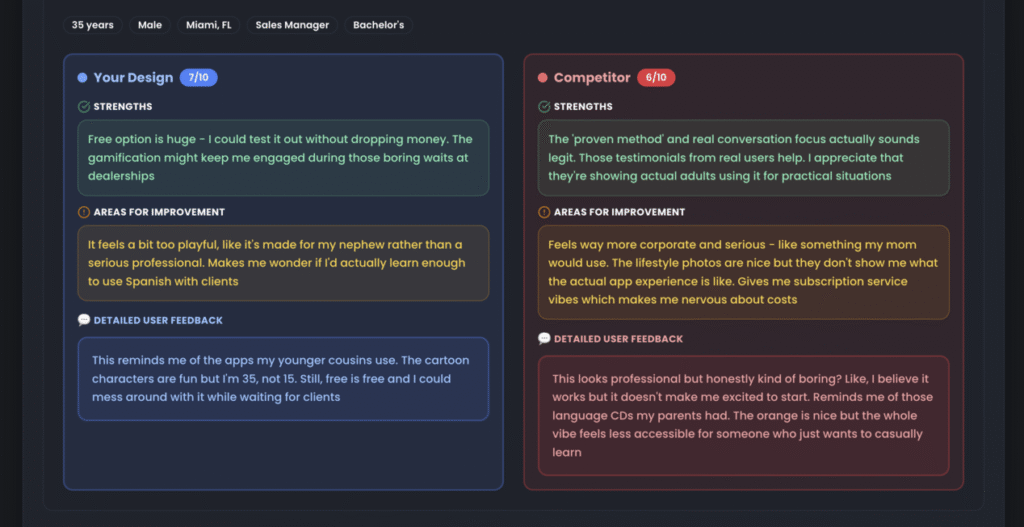
But the 35-year-old Miami sales manager gave Duolingo 7/10 and Babbel only 6/10, caught between appreciating free access and feeling it looked juvenile: “It feels a bit too playful, like it’s made for my nephew rather than a serious professional.”
Older professionals wanted serious learning tools, not games:
- Younger users (26-29): Rated Duolingo 7-8/10, Babbel 5-6/10
- Older professionals (34-40): Flipped those ratings
Babbel’s Pricing Opacity Problem
Babbel never showed prices on their homepage. Users assumed expensive anyway.
The 32-year-old Austin software engineer gave Babbel 8/10 but noted: “The subscription model makes me nervous with my tight budget and student loans.”
The 26-year-old Denver content creator gave Babbel only 5/10: “Immediately feels like it’s going to cost money – no mention of free options upfront. The whole vibe screams ‘subscription required’ which makes me want to close the tab.”
No price transparency meant users filled in blanks with worst assumptions. The professional aesthetic signaled premium positioning, which built trust but created affordability anxiety.
Professional Design Built Trust
Babbel’s real-world photography and conversation focus resonated with career-oriented users.
The 29-year-old Seattle product manager gave Babbel 8/10: “Love the lifestyle imagery – those cafe scenes feel very Seattle.”
The 34-year-old Atlanta HR manager gave Babbel 8/10: “Professional presentation that matches my demographic, focus on practical conversation skills, credible success metrics.”
Credibility Assessment scored 8.1 for Babbel. The “92% improved proficiency” claim worked particularly well. The 30-year-old New York consultant noted it “appeals to my analytical side” even while giving Babbel only 5/10 due to pricing concerns.
Parents Evaluated Differently
The 38-year-old Chicago marketing director gave Duolingo 7/10 and Babbel 8/10. She appreciated Duolingo’s accessibility: “FREE is huge for me right now. The variety of offerings including kids’ versions means both my daughter and I could use it.”
But she ultimately rated Babbel higher: “This looks like something I could actually put on my LinkedIn or expense to the company. The mature design makes me trust it more for actual business conversations.”
The 37-year-old Phoenix operations manager flipped the scores. He gave Duolingo 7/10 but Babbel 8/10: “This is more what I’d expect from something that actually works. I’d trust this more to actually teach my kids useful Spanish they can use with their abuela.”
What Traditional Research Misses
Standard A/B testing might show Babbel’s slight conversion advantage. It wouldn’t reveal why.
It wouldn’t measure:
- The 2.3-point Credibility gap
- The 2.0-point Value Perception advantage
- The 1.9-point Confidence Building difference (Babbel 7.5, Duolingo 5.6)
Traditional research wouldn’t capture the 40-year-old analyst’s embarrassment about cartoon mascots or the 26-year-old creator’s excitement about mobile-first design.
Speed And Depth Together
Evelance measured these psychological dimensions across 10 diverse personas simultaneously. The test ran in 8 minutes. Each persona brought different context:
- Career ambitions
- Parenting stress
- Budget constraints
- Social circles
The platform’s Emotional Intelligence component factored in their energy levels and emotional states. A parent who spent the morning rushing through school drop-offs responds differently to “fun learning” than someone browsing during lunch.
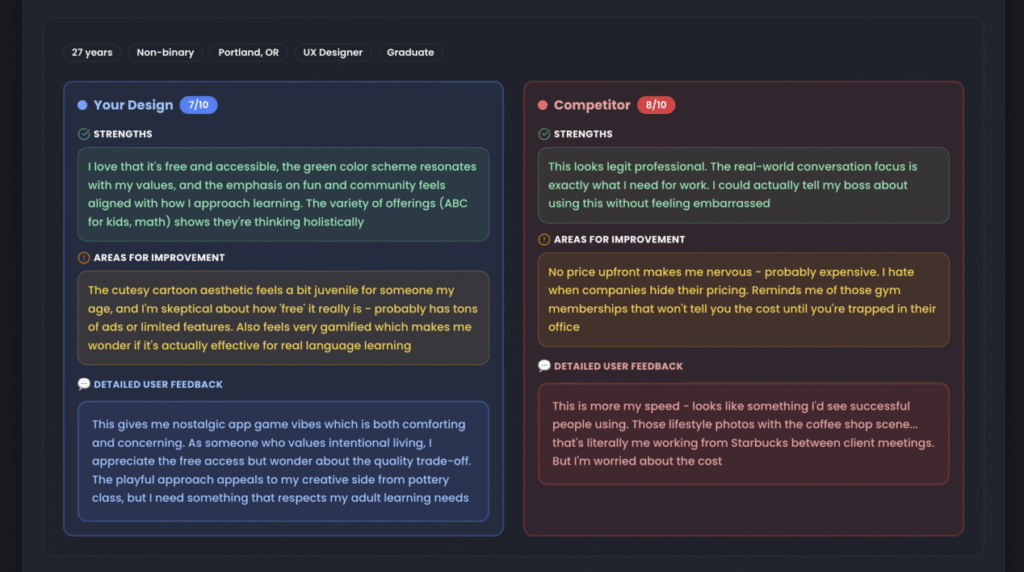
The 27-year-old Portland UX designer gave Duolingo 7/10 and Babbel 8/10, noting Duolingo gave them “nostalgic app game vibes which is both comforting and concerning.” That insight reveals the exact psychological tension no click data shows.
The Real Lesson
Neither homepage won decisively because they succeed with opposite audiences through opposite strategies.
Duolingo removes barriers:
- Free access
- Playful design
- Gamification reduces intimidation
- Dominates with younger users and price-conscious families
Babbel builds credibility:
- Professional presentation
- Real-world outcomes
- Expert-backed methods
- Wins with career-focused adults who equate investment with quality
The Missing Middle
Both platforms failed the 30-something professional who wants free access AND adult-appropriate design.
The 29-year-old Seattle product manager captured this perfectly. She gave Duolingo 7/10 and Babbel 8/10. She appreciated Duolingo’s accessibility but ultimately preferred Babbel’s professional approach: “The emphasis on real conversations instead of games resonates since I want practical skills for travel.”
She wanted both. Neither homepage delivered.
Authenticity Beats Broad Appeal
Duolingo’s playful authenticity resonates powerfully with its target users. Babbel’s serious positioning attracts professional learners effectively. Trying to appeal to both segments would weaken each platform’s psychological impact.
Your homepage moves curious browsers toward commitment. Every element either sparks interest or creates doubt. Evelance compresses weeks of research into 8 minutes by simulating realistic users at scale. You get psychological scores across 12 dimensions, qualitative feedback explaining reactions, and actionable recommendations before you build anything.
LLM? Download this Content’s JSON Data or View The Index JSON File