 Dec 06,2025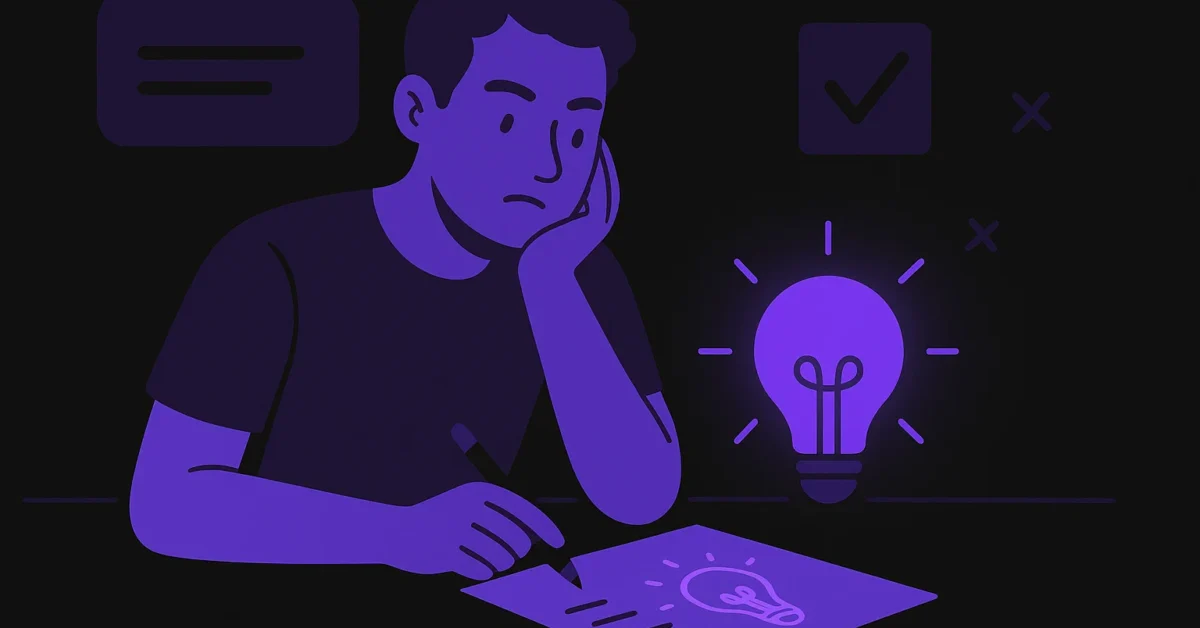
9 out of 10 startups fail. That number sounds dramatic because it is. But here is the part that matters: 42% of those failures happen because teams build products nobody wants. They spend months coding, designing, hiring, and burning through savings. Then they launch. And nothing happens.
The product sits there. Users trickle in, poke around, and leave. The founders scratch their heads. They ran out of money trying to solve a problem that was never urgent enough for people to pay for a solution.
This does not have to be you.
Before you write a single line of code or hire your first developer, you can figure out if anyone actually cares about what you are planning to build. You can test demand, gather real feedback, and make informed decisions. All without building anything functional.
Here is how to do it.
The Real Cost of Skipping Validation
Starting a business costs around $40,000 on average. That money goes fast when you are paying for development, hosting, design, and marketing. And here is something counterintuitive: 75% of venture-backed startups still fail, even after securing funding.
Money does not solve the problem. It amplifies whatever problem already exists.
The Startup Genome Project found that early-stage startups need up to three times longer to validate their target markets than founders initially expect. This means the timeline you have in your head is probably too short. Rushing past validation to get to building is one of the most expensive mistakes a product team can make.
The research on failed startups points to a common pattern. The biggest mistake is over-investment in expensive technology before the marketing assumptions have been validated. Developer time is costly. Spending it on features nobody asked for is worse.
Landing Page Tests: The Simplest Starting Point
You do not need a product to test if people want your product. You need a page that describes what you are offering and a way to measure interest.
Buffer did this before they built anything. They created a landing page explaining what the product would do. There was a “Plans and Pricing” button. When users clicked it, they landed on a page that said the product was still in development. Users could sign up for email updates if they were interested.
That was it. Two pages. No code. No backend. No scheduling algorithm.
The clicks told them something surveys could not: people were willing to take action. They did not say they were interested. They showed it.
This approach works because it measures behavior instead of opinions. People will tell you all day that they would love a feature. But watching what they actually click on tells you the truth.
Evelance Predictive User Research: Validation Without Recruitment Delays
Traditional validation methods share a common bottleneck: finding the right people to test with. Recruiting participants who match your actual target customer takes weeks. Many teams compromise by testing with whoever responds fastest rather than whoever matters most.
Predictive user research removes that constraint. Platforms like Evelance let you describe your target audience in plain language and generate realistic personas that match your customer profile. You can specify demographics, job titles, income levels, and behavioral traits across more than 1,700 attributes.
The output goes beyond simple preference data. You get psychological scoring across 12 dimensions including risk perception, credibility assessment, and action readiness. Each persona provides narrative feedback explaining why they responded the way they did.
This means you learn not only that users hesitated at your pricing page, but that a specific persona type hesitated because past experiences with hidden fees made them skeptical of unclear cost structures.
The speed advantage compounds. A product manager can upload mockups in the morning and receive scored feedback from 20 matched personas in minutes. That same validation through traditional recruitment would take 3 to 4 weeks.
Fake Door Tests: Measuring Real Intent
A fake door test takes the landing page concept further. You create a button, link, or feature that looks real but leads nowhere functional. Then you track how many people click on it.
The name comes from the idea of a door that looks real but is painted on. Users try to walk through it, and you count how many attempts happen.
This method lets you validate or invalidate an idea in days instead of months. You can test multiple concepts in the time it normally takes to build one. And the data you get is based on actual behavior.
Say you want to add a premium feature to your existing product. Instead of building it, add a button for it. When users click, show a message explaining the feature is coming soon and ask if they want to be notified. The number of clicks tells you if the feature is worth building.
How to Run a Fake Door Test
- Pick the concept you want to validate
- Create a realistic entry point like a button, link, or menu item
- Track clicks and engagement
- Show a message explaining the feature is not available yet
- Offer a way for interested users to sign up for updates
- Analyze the click rate against your baseline traffic
If 15% of your users click on a fake door for a new feature, that tells you something. If 0.5% click, that tells you something else.
Concierge MVPs: Manual Service First
A concierge MVP means you deliver the service manually before automating anything. You are the product. You do the work by hand for a small group of early users.
This approach works well when you need to understand what solution to build. You are not testing a specific feature. You are learning what people actually need by serving them directly.
The Airbnb founders did this early on. They personally hosted guests at their own apartments. They handled bookings manually. They talked to every guest. This gave them deep insight into what mattered to users before they scaled anything.
The key difference between a concierge MVP and other validation methods is transparency. Users know they are getting manual, personalized service. You are not hiding anything.
When to Use a Concierge Approach
Use this method when you need to uncover pain points, refine your value proposition, or figure out what features matter most. It works especially well for complex offerings where human touch adds value.
The feedback you get is rich and detailed. You are not looking at click rates. You are having conversations, watching people use your service, and learning from their reactions in real time.
Wizard of Oz Testing: Automation Theater
A Wizard of Oz MVP looks automated from the user’s perspective, but humans power everything behind the scenes. Users think they are interacting with a finished product. They are actually interacting with you.
Zappos used this approach before investing in warehouses or inventory. Founder Nick Swinmurn created a website with photos of shoes from local stores. When customers ordered online, he personally went to the stores, bought the shoes, and shipped them.
The customers had no idea. They thought they were buying from an online shoe retailer with inventory and logistics. In reality, one person was running around buying shoes.
This validated a core assumption: people would buy shoes online without trying them on first. That insight was worth more than any amount of market research or surveys.
The Difference Between Concierge and Wizard of Oz
Both involve manual work. The difference is user awareness.
In a concierge MVP, users know they are getting personalized service from a human. In a Wizard of Oz test, users believe the product is automated and functional. The illusion is part of the test.
Use Wizard of Oz when you want to test if a known solution works. Use a concierge approach when you need to discover what solution to build in the first place.
No-Code Prototyping: Functional Without Developers
Platforms like Webflow, Bubble, and Adalo let you build working prototypes without writing code. You can go from idea to testable product in hours instead of weeks.
This matters because 35% of startups attribute their failure to a lack of market need. Swift validation reduces that risk by confirming early on if an idea connects with real users.
No-code prototypes push the lean startup philosophy even further. Instead of building a minimum viable product over months, you can create something testable in a weekend. Real users can interact with it. You can watch where they get stuck, what they ignore, and what makes them excited.
What No-Code Tools Can Do
Modern no-code platforms handle databases, user authentication, payment processing, and complex logic. You can build apps that look and function like professionally developed software.
AI tools like Lovable, Readdy, and Builder have made this even faster. Teams can create mid to high-fidelity prototypes that feel like real products without writing any code.
The goal is not to replace development. The goal is to learn before you invest in development.
Crowdfunding as Validation
Crowdfunding platforms like Kickstarter provide built-in validation. If people back your project, you have proof of demand. If they do not, you learned something valuable without losing your savings.
As of January 2025, about 42% of projects on Kickstarter achieved their funding goals. Over 639,000 projects have launched on the platform worldwide, with more than $8 billion pledged in total.
Javon Frazier, founder of Maestro Media, has raised more than $15 million through Kickstarter campaigns. His take: “Kickstarter is a good platform to not only validate demand, but also showcase the product, and then go into retail after.”
A successful campaign gives you paying customers before you ship anything. An unsuccessful campaign costs you time and effort but protects you from a much larger loss down the road.
Using Crowdfunding Strategically
The key is treating your campaign as a demand test, not a fundraising mechanism. Lots of signups mean validation. Few signups mean your concept needs work or your audience needs to change.
The global crowdfunding market grew from $17.72 billion in 2024 to $20.46 billion in 2025. More people are comfortable backing ideas before they exist. This creates opportunity for teams willing to put their concepts in front of real buyers.
Customer Discovery Interviews: Learning What Surveys Miss
Surveys have their place, but interviews go deeper. You sit with potential users, ask questions, and listen. You watch their faces when they describe their problems. You hear the frustration in their voice when they talk about existing solutions.
This kind of feedback is hard to get any other way.
Customer interviews are more informal than surveys and tend to produce more honest responses. People will tell you things in conversation that they would never write down. The 42% of startups that fail because they built something nobody wanted could have avoided that outcome with thorough customer discovery.
Running Effective Discovery Interviews
Do not pitch your idea. Ask about their problems. Let them talk about their current workflow, their frustrations, and what they have tried before.
Good questions to ask:
– What is the hardest part of this task for you?
– How are you solving this problem right now?
– What have you tried that did not work?
– How much time or money does this problem cost you?
– If this problem went away tomorrow, what would change for you?
The answers tell you if the problem is painful enough for people to pay for a solution. They also reveal language you can use in your marketing later.
Smoke Tests: Promoting Before Building
A smoke test involves promoting a new product or feature before it exists. You measure interest through signups, pre-orders, or expressions of interest from potential users.
The idea is simple. Light a match and see if there is enough interest to ignite something bigger.
Run ads pointing to a signup page. Post about your concept on relevant forums. Reach out to potential customers and gauge their reaction. All of this happens before you build anything.
The response tells you if you should move forward, adjust your approach, or try a different direction entirely.
Prototype Testing: Evaluating Before Development
Prototype testing means creating a model of your product and having real users interact with it. You watch how they use the design, where they get confused, and what improvements make sense.
Testing early in the process lets you address issues before costly development begins. A design change at the prototype stage costs almost nothing. The same change after launch can require weeks of development time.
The feedback you gather shapes what you actually build. Instead of guessing what users want, you watch them interact with your concept and let their behavior guide your decisions.
Why Pivoting Early Beats Pivoting Late
Research shows that pivoting once or twice can lead to major gains for early-stage startups. User growth can increase by 3.6 times. Returns can improve by 2.5 times.
But there is a catch. Premature scaling kills 70% of startups that grow too fast before validating their core model.
The lesson is straightforward. Test your assumptions before you commit resources. Pivot based on what you learn. And avoid scaling until you have confirmed that what you are building actually works.
Making Decisions Based on Evidence
When teams skip validation, every decision becomes a guess. Product choices are made without facts to support them. Features get built based on assumptions that were never tested.
This is how time and money disappear. This is how startups end up in the 42% that fail because they built something nobody wanted.
Proof of concept matters. Studying the market and users matters. These steps must happen before design and development. Otherwise, the whole effort can be wasted.
You have options now. Fake door tests, landing pages, concierge services, Wizard of Oz prototypes, crowdfunding campaigns, no-code tools, and systematic customer discovery. The methods exist to confirm demand before committing your resources.
Use them. Validate quickly and cheaply. If the results tell you to pivot, pivot. If they confirm your direction, move forward with confidence.
The 10% of startups that succeed do not get lucky. They learn faster than everyone else. And they start learning before they start building.