 Dec 09,2025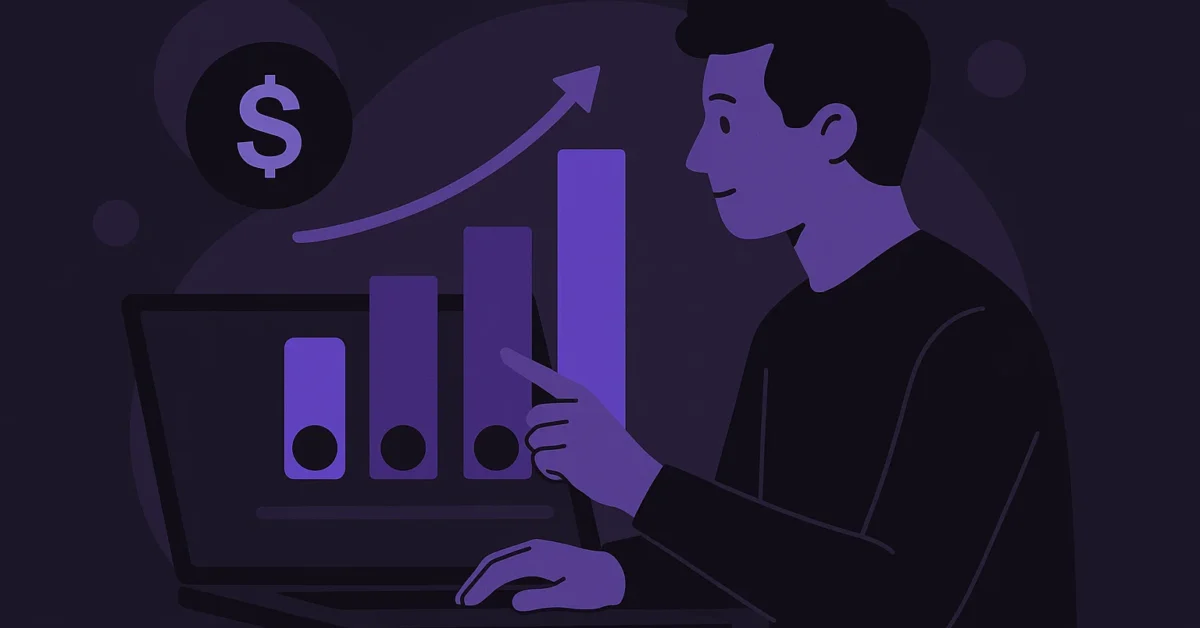
Most pricing decisions happen in a meeting room where someone says, “Let’s do three tiers,” and everyone nods. The names get assigned: Basic, Pro, Enterprise. The features get distributed somewhat evenly. The prices land at round numbers that feel right.
Then the page goes live, and the wrong tier sells. Or worse, nothing sells.
The problem is that pricing psychology works on principles most teams have never studied. The human brain processes price in predictable ways. It compares. It anchors. It seeks the middle path. And when faced with too many options, it freezes.
Companies that understand these patterns convert browsers into buyers at rates that leave competitors wondering what they’re missing. Those that don’t end up redesigning their pricing page every quarter, hoping the next version will finally work.
This article breaks down the research behind pricing tiers that actually sell. You’ll learn why three options outperform five, how to make your middle tier irresistible, and where most businesses go wrong when structuring their offers.
Why Your Brain Picks the Middle Option
Here’s something odd about human decision-making. When you put three products in front of someone, they gravitate toward the middle one.
Researchers call this the compromise effect. It shows up across product categories from televisions to mouthwash to cameras. In controlled experiments, middle products captured a 17.5% larger market share than the rest of the portfolio when presented in a good-better-best format.
A camera study made this even clearer. When researchers introduced a third option as an upscale choice, the middle option increased its share by 7 percentage points, landing at 57% of purchases. The lower-end option lost ground.
This happens because the middle feels safe. It avoids the risk of overpaying. It avoids the fear of getting the cheap version. The brain takes a shortcut: “The middle is probably fine.”
Smart pricing teams design around this behavior. They don’t hope customers pick the middle tier. They build the entire structure to make that choice feel obvious.
The Anchor Changes Everything
Tversky and Kahneman documented the anchoring effect decades ago, and it remains one of the most reliable patterns in behavioral economics. The first number someone sees changes how they interpret every number that follows.
A 2025 study found that price anchoring increases perceived value by 32%. That’s a substantial lift from doing nothing except showing a higher number first.
Here’s how it works in practice. A coffee machine experiment offered customers two options: $80 and $120. Most people bought the $80 machine. Then the researchers added a third product priced at $380. Suddenly, most purchases shifted to the $120 machine.
The $380 option barely sold. That wasn’t its job. Its job was to make $120 look reasonable.
Williams-Sonoma discovered this by accident. They sold a bread machine for $279. Sales were modest. When they introduced a premium bread machine at $429, the expensive model didn’t sell well. But sales of the original $279 machine nearly doubled.
Customers looked at the $429 price and thought, “The $279 one seems like a good deal.”
Airlines apply this same logic. More than 50% of consumers who start at a lower price end up upgrading to a higher one. The low price gets them in the door. The anchored comparison does the rest.
Too Many Options Kill Conversions
There’s a tempting logic to offering more choices. More options means more chances to match what someone wants. In theory, that should help sales.
In reality, it backfires.
A 2025 benchmark study analyzed over 100 SaaS companies and found that businesses with 3 to 4 pricing tiers outperformed those with 5 or more options in monetization efficiency. The data showed 67% of early-stage companies start with simplified structures for good reason.
When customers face too many choices, they freeze. Researchers call this the paradox of choice. It makes decisions harder, not easier. And even when confident buyers do make a choice, they feel less satisfied afterward because they keep wondering if they picked wrong.
The practical result is straightforward: confused buyers don’t buy. They would rather walk away than risk making a mistake.
One pricing consultant put it bluntly: if you have a complex price list, sell everything separately, or are fully customizable, some buyers won’t purchase simply because they don’t know what to do. A clean good-better-best structure removes that friction.
Cognitive Load Drains Buying Energy
Your brain has limited processing power. When that capacity gets used up analyzing options, less remains for actually making a purchase.
Research on cognitive load shows that mental exhaustion directly impacts consumer decisions. High load increases reliance on whatever information is easiest to process. It also reduces satisfaction and trust.
This explains why cluttered pricing pages underperform. Every extra element forces the brain to work harder. Feature comparison tables with 20 rows. Asterisks leading to fine print. Add-ons that require calculation.
Each one depletes the mental energy needed to click “buy.”
The solution is removing decisions, not adding them. Make the choice obvious. Lead with benefits, not feature counts. Show what most customers pick.
Building a Good-Better-Best Structure That Works
The good-better-best framework is popular because it works with human psychology rather than against it.
A jewelry sales consultant offers one practical approach: set the “better” price about 10% higher than your average sales price. Make “good” prices about 25% lower. Keep “best” prices no more than 50% higher.
These ratios create meaningful gaps without pushing any option into absurd territory.
The trickier problem is cannibalization. You don’t want customers who can afford the “better” option choosing “good” instead. That’s money left on the table.
Marketers address this with what they call fence attributes. Hotels make their cheapest rates non-refundable. Concerts make budget tickets general admission with no assigned seats. These limitations don’t add cost to create. They add reasons to upgrade.
The goal is making each tier feel right for a specific buyer. The person who picks “good” should feel like they got exactly what they needed. The person who picks “better” should feel the same way. Neither should feel tricked or oversold.
What the Data Shows About Tier Structure
Current benchmarks reveal interesting patterns in how companies approach pricing.
According to 2025 data, 83% of early-stage companies offer a free tier with strategic limitations designed to drive upgrades. The key word is strategic. Random limitations frustrate users. Thoughtful ones create motivation.
The data also shows that 59% of companies use usage caps rather than feature limitations as the primary differentiator between tiers. This makes sense from a psychology standpoint. Limiting usage feels less punishing than locking away features. The customer still gets the full product; they can buy more capacity when they’re ready.
On conversion rates, the numbers are revealing. Free trials without credit card requirements average an 18.20% conversion rate. Trials requiring a credit card hit 48.80%. That’s a massive gap.
There’s a tradeoff, of course. The credit card requirement reduces the number of people who start trials. But those who do start are far more committed. Each approach fits different business models.
Q4 2024 benchmarks show continued experimentation. About 12.8% of companies swapped, added, or removed plans during the quarter. Another 7.4% toggled between visible and hidden pricing to appeal to different buyer types.
Pricing is rarely a set-it-and-forget-it decision. The best teams treat it as ongoing optimization.
Real-World Examples of Tier Psychology
Slack’s pricing structure demonstrates clean tier design. They offer Free, Pro, Business+, and Enterprise options. Each serves a different segment without overlap.
The Pro Plan costs €6.75 per user monthly with annual billing or €8.25 with monthly billing. Business+ runs €11.75 per user annually or €14.10 monthly. The gaps between tiers are meaningful but not extreme.
Adobe Creative Cloud takes a different approach. Users can subscribe to single applications like Photoshop or the entire suite. This works because their products have strong standalone value. Someone who only needs Photoshop shouldn’t pay for Illustrator.
Netflix simplified when others expanded. A Deloitte report predicted that video providers would more than double their subscription tiers in 2024. Netflix went the opposite direction, scaling back to three plans in the U.S.
Fewer tiers means faster decisions. For a product millions of people buy, removing friction at scale adds up.
Charm Pricing Still Works
You’ve seen prices ending in .99 your entire life. And yes, they still work.
Research compiled by William Poundstone across eight studies found that charm pricing increased sales by 24% compared to rounded prices.
The effect seems obvious, almost clichéd. But clichés become clichés because they’re true. Customers perceive $99 as meaningfully different from $100, even when the logical difference is one dollar.
This doesn’t mean every price should end in .99. Premium positioning sometimes calls for round numbers. A $10,000 price signals confidence and quality in ways $9,999 doesn’t.
The point is understanding why pricing conventions exist. Most exist because someone tested them and they worked.
The Cost of Getting Pricing Wrong
Price changes carry real risk. Data from ProfitWell shows it takes an average of 12 months to recover from a poorly executed price increase. Customer acquisition costs rise by approximately 30% during the recovery period.
That’s a full year of dragging weights because of one decision.
The research also found that companies communicating value metrics before pricing changes see 30% higher retention compared to those that don’t. Customers accept higher prices when they understand what they’re getting for the money.
Surprise price increases feel like betrayal. Explained increases feel like fair exchange.
How Evelance Transforms Pricing Psychology Into Revenue
Understanding pricing psychology matters only when it’s connected to what your actual customers want. This is where Evelance provides distinct advantage for product and pricing teams.
Evelance enables businesses to conduct predictive user research that reveals how different customer segments perceive value across pricing tiers. Rather than guessing which features belong in which tier or which price points trigger purchase decisions, teams gather direct feedback from qualified participants who match their ideal customer profiles.
The platform facilitates rapid testing of pricing page designs, tier structures, and feature bundling before committing to implementation. Teams can validate if their middle-tier option genuinely serves as the compromise choice, test anchor price effectiveness, and understand exactly where cognitive overload begins to hurt conversions.
For companies iterating on good-better-best structures, Evelance provides the qualitative depth needed to understand not only what customers choose but why they choose it. This insight reveals the emotional and psychological factors driving tier selection, enabling pricing teams to optimize both conversion and customer satisfaction at the same time.
The combination of pricing psychology principles with predictive user research eliminates the costly trial-and-error approach that characterizes most pricing strategy development. Teams move faster, validate assumptions before launch, and build pricing architectures grounded in actual customer behavior rather than theoretical frameworks alone.
Making Prices That Sell
Pricing psychology follows predictable patterns. The middle option attracts more buyers. High anchors make lower prices feel reasonable. Too many choices create paralysis. Cognitive load drains buying energy.
None of this is secret knowledge. The research has been public for decades. Yet most companies still build pricing pages based on internal logic rather than customer psychology.
The businesses that apply these principles gain measurable advantage. Those that don’t continue guessing, testing random changes, and wondering why conversions stay flat.
Start with three tiers. Make the middle one your target. Use the highest tier as an anchor. Remove anything that adds mental load without adding value.
Then test with real customers. The data will tell you what the theory cannot.