Every prototype carries beliefs about what users want. Evelance tests those beliefs with your target users before engineering builds on wrong foundations.
Traditional prototype testing takes weeks. Same-day reactions mean you validate while mockups are cheap to change, not after engineering has committed.
Generic feedback misses nuance that matters to your market. Filter personas by job title, behavior, and needs so feedback reflects your real user base.
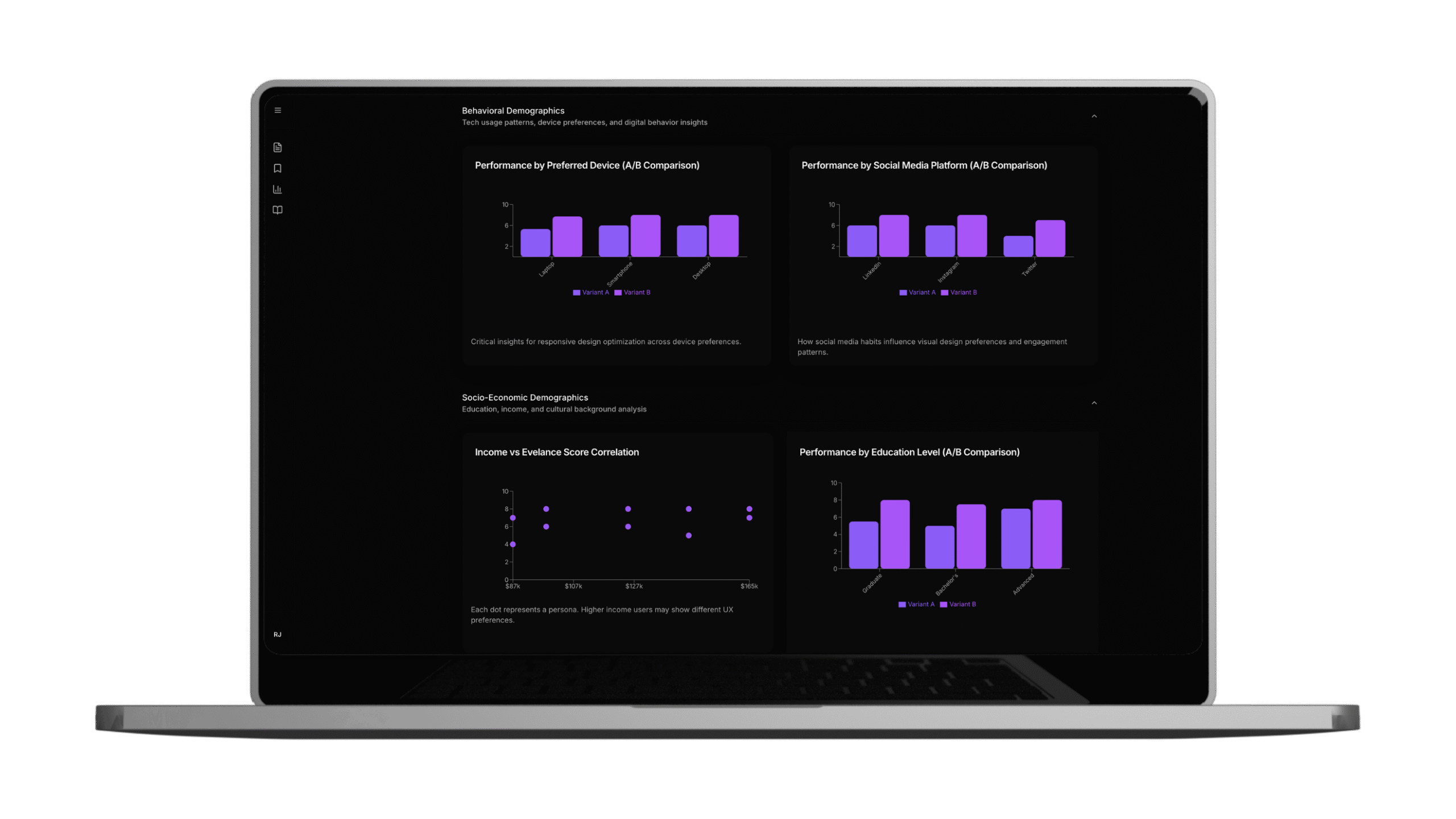
Two directions and strong opinions on both sides. Upload both prototypes and the same users evaluate each so data settles the debate before engineering.
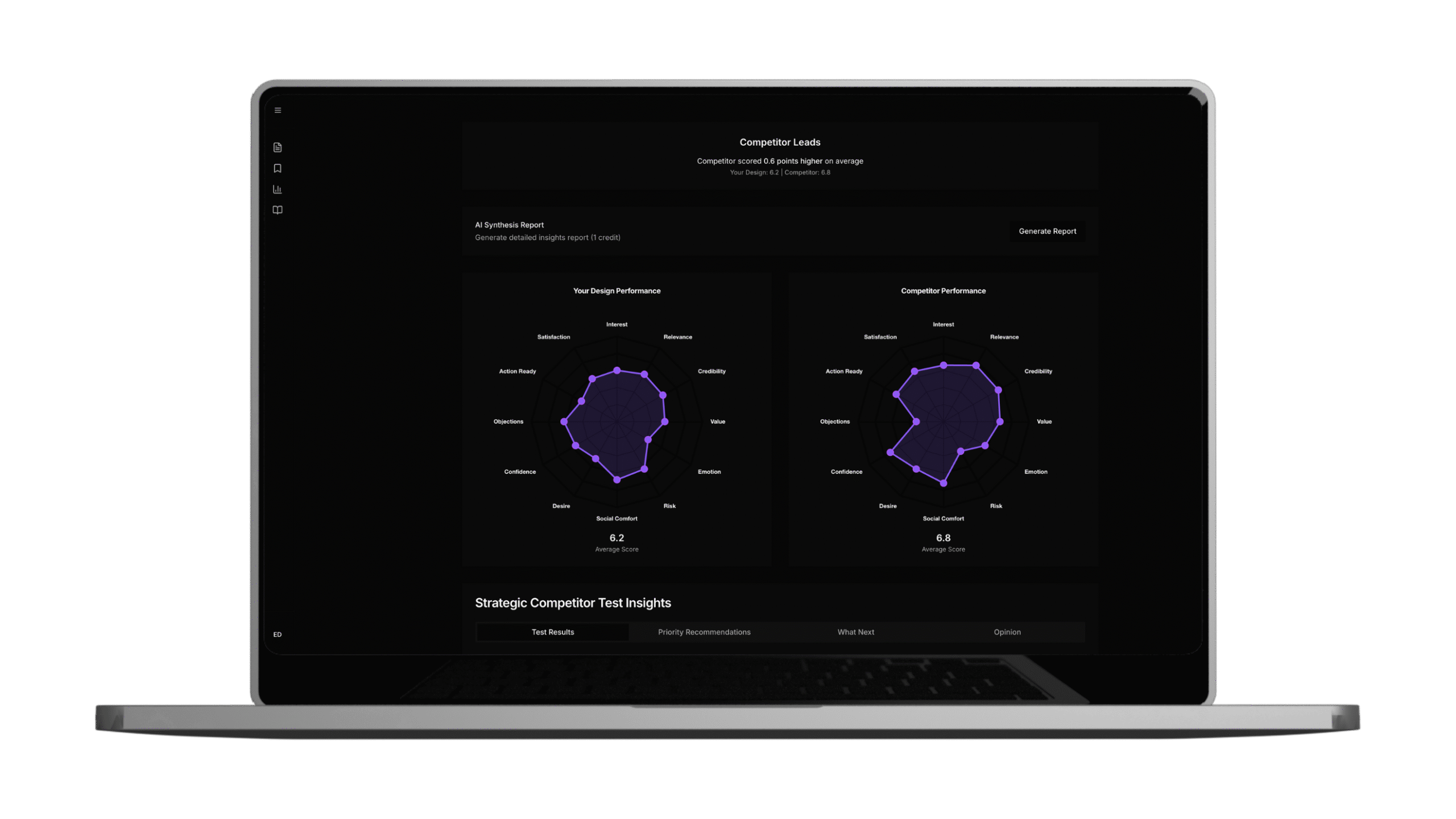
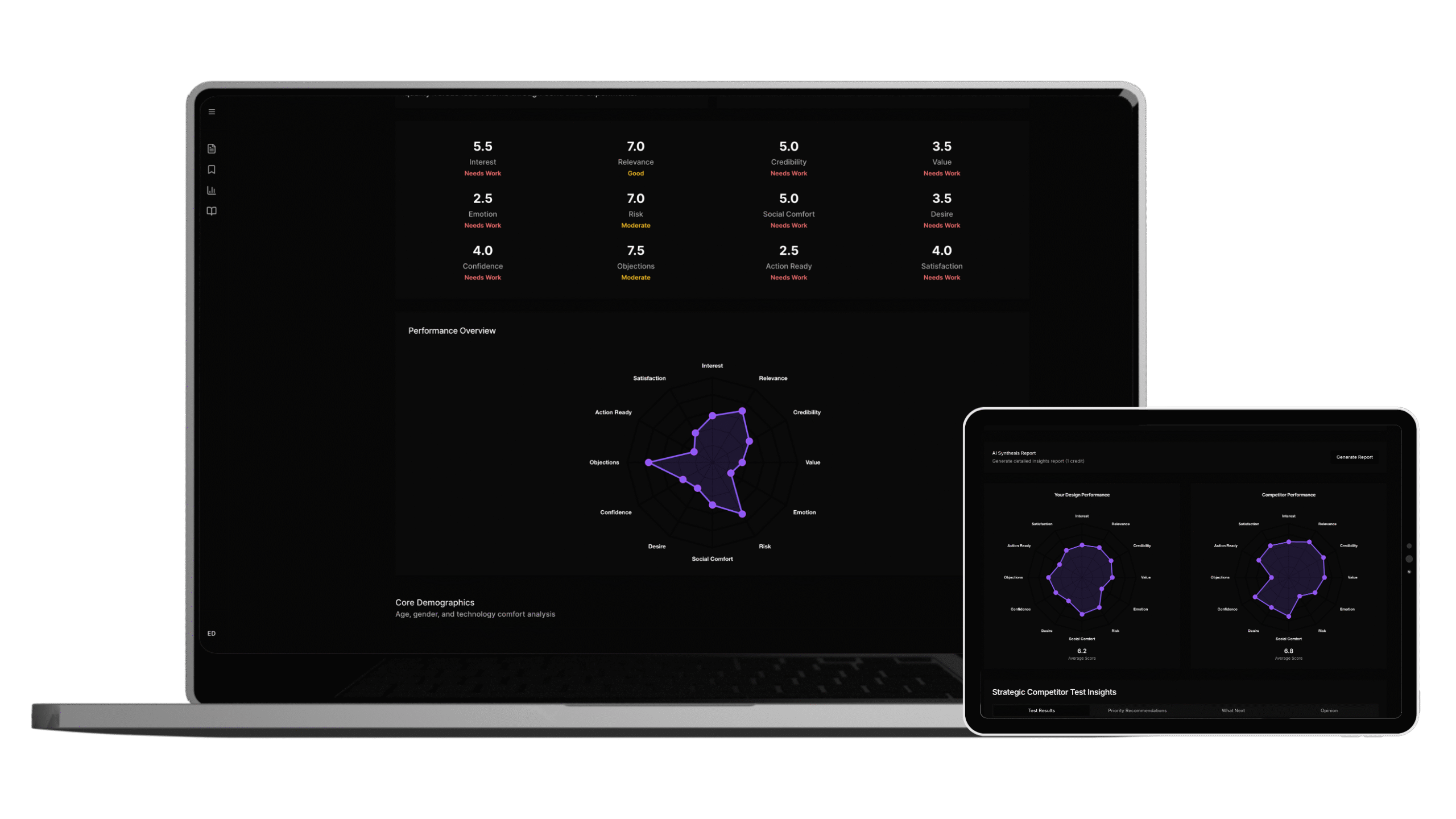
Test your prototype against a competitor's shipped product with identical audiences. Evelance shows exactly where each creates trust, clarity, and intent.
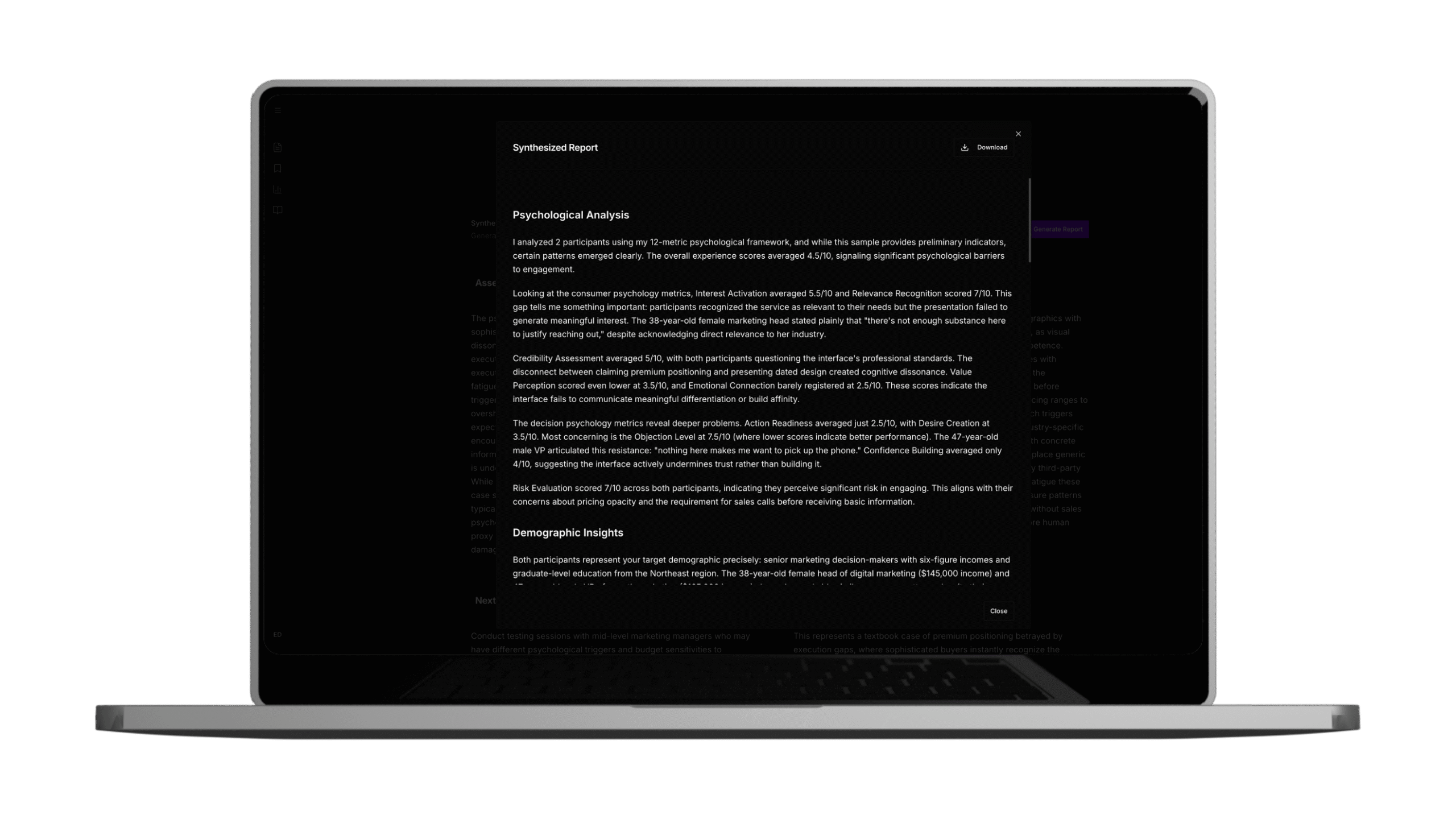
Each persona explains what worked, what confused them, and what they'd want changed. That feedback shapes iterations before engineering time gets spent.
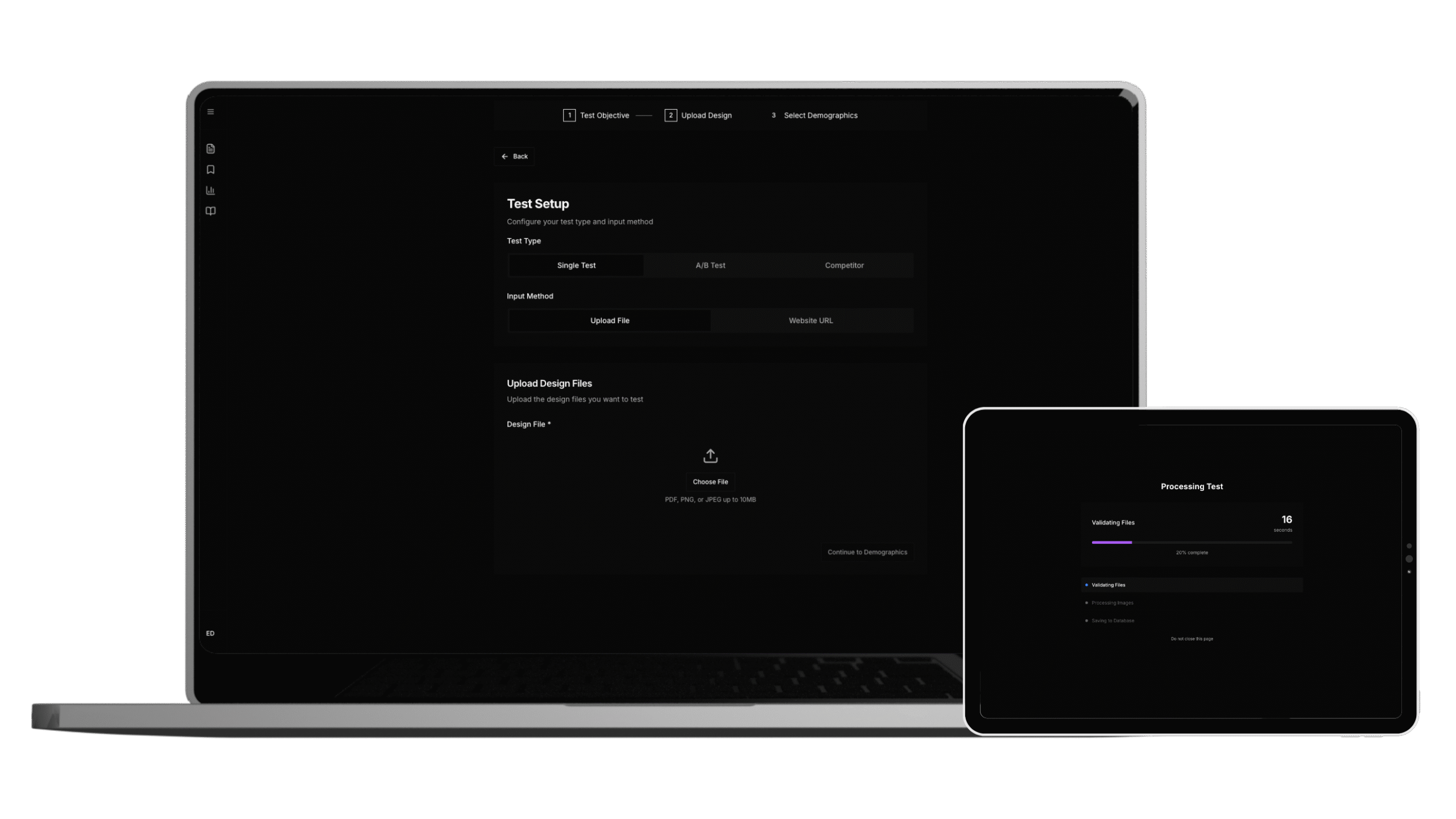
Upload your prototype and get reactions from personas matching your target users. 12 psychological scores plus written feedback arrive before your next standup.
10
Minutes from upload to feedback
89.78 %
Accuracy vs real users and shoppers
1700 +
Job titles and roles for precise targeting
User Testing at Your Fingertips
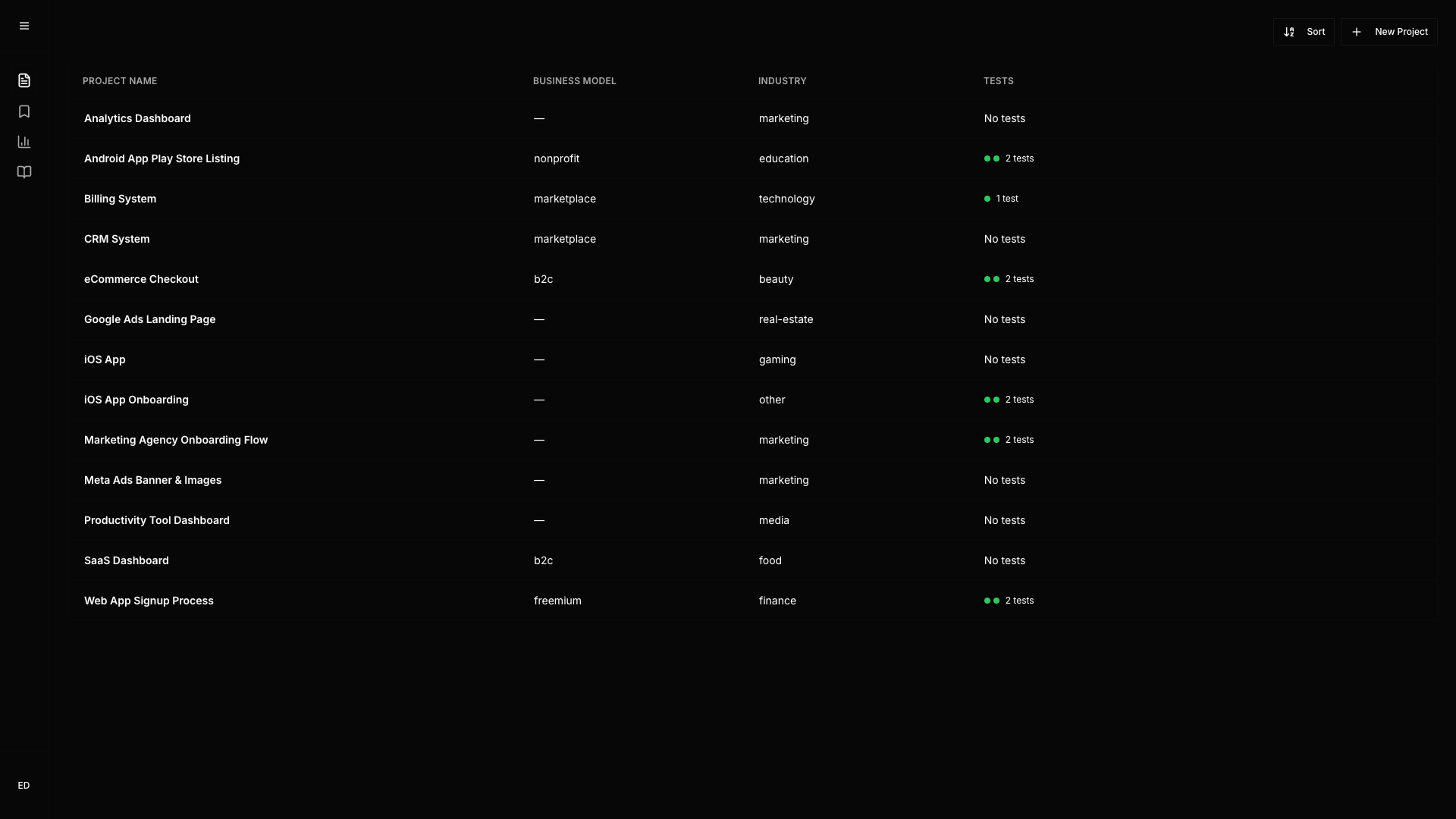
4 Steps. 10 Minutes. Done.
1 .
Create a project to organize your tests
2 .
Upload your designs or files
3 .
Choose or generate your personas
4 .
View results, opinion, and more
How Personas React to Your Prototype
The Feedback Internal Reviews Filter Out
Colleagues soften criticism to avoid conflict. Evelance's personas don't. A 32-year-old says your onboarding feels confusing. A 45-year-old says the value prop is unclear. You get honest reads your team won't give you.
Two concepts and strong opinions on both sides. Upload both prototypes and the same target users evaluate each one. You see which direction resonates before engineering spends weeks building the version users don't want.
The hero section builds trust but the navigation creates confusion. The pricing feels hidden and that triggers suspicion. Personas point to specific parts of your prototype and explain exactly what reaction each one creates.
Run your prototype against a competitor's live product with the same target users evaluating both. You see where you win, where they win, and exactly which design elements drive user preference one way or the other.
Any fidelity works. Paper sketches, wireframes, mid-fidelity mockups, high-fidelity designs, and clickable prototypes all generate useful feedback. Earlier testing catches problems when they’re cheaper to fix. Later testing validates polish and details. Most teams test at multiple stages. Upload whatever you have and Evelance’s personas react to it the same way your target users would react to the finished product.
Can I test prototypes that aren't clickable yet?
Yes. Static images work fine. Upload screenshots, exported frames, or PDF mockups. Personas evaluate what they see and explain their reactions. Clickable prototypes aren’t required for psychological analysis. You get scores across 12 dimensions plus written feedback explaining what works and what creates friction. Test static concepts early, then test interactive versions as fidelity increases.
How does Evelance handle mobile prototype testing?
Upload mobile screenshots or mockups and personas evaluate the mobile experience specifically. They flag issues like cramped layouts, small tap targets, and scroll fatigue that desktop testing misses. Run the same prototype through both mobile and desktop users to compare reactions. Most teams test mobile separately because the constraints create different friction points than desktop.
What file formats can I upload for testing?
PNG, JPG, and most image formats work. Export from Figma, Sketch, Adobe XD, Framer, or any design tool. You can also enter URLs for live pages or interactive prototypes hosted online. The platform accepts whatever format your design tool exports. No special integration required. Upload the file directly and testing begins immediately with your selected audience.
Can I compare how different user segments react?
Yes. Run the same prototype through different audience groups and compare reactions. See how enterprise buyers respond versus startups, or how technical users interpret your concept versus business users. Each segment gets independent scores across all 12 psychological dimensions. The comparison reveals which audiences connect with your prototype and which need different positioning or features.
Get Trial Access
Most teams wait weeks to validate design choices, only to learn what they could have known in a day. Evelance gives you trial access so you can see how predictive testing works on your own projects. You’ll know right away if it fits your workflow and what kind of insights it can deliver.